
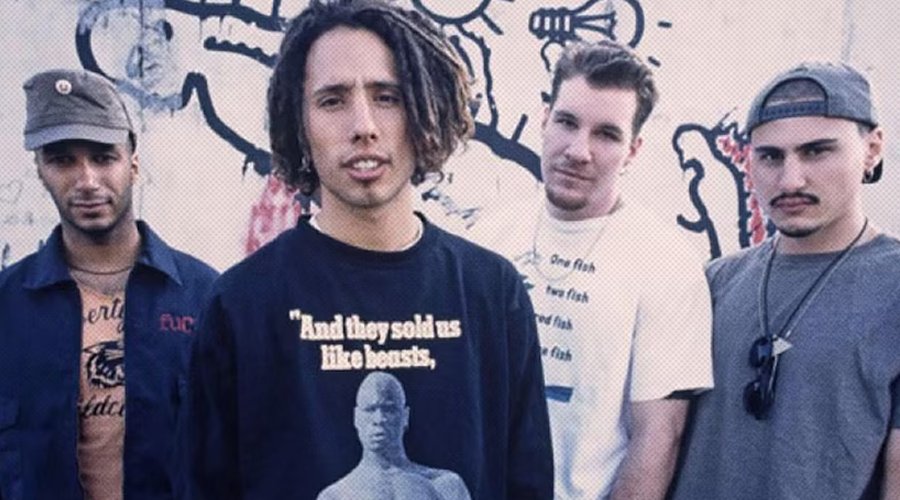

In the fall of 2000, the music world was shaken when Rage Against the Machine — one of the most politically volatile and musically aggressive bands of the late ’90s — officially announced their breakup. Known for fusing rap, metal, punk, and revolutionary politics, the band’s dissolution came as a surprise to fans, especially as they were still riding high off the success of their latest releases and a dominant live reputation.

The Breakup Announcement
On October 18, 2000, frontman Zack de la Rocha issued a statement confirming he was leaving the band, citing internal dysfunction and an inability to move forward creatively. The statement read:
“I feel that it is now necessary to leave Rage because our decision-making process has completely failed. It is no longer meeting the aspirations of all four of us collectively as a band, and from my perspective, has undermined our artistic and political ideal.”
While rumors had circulated for months regarding internal tensions, the official announcement confirmed what fans feared: Rage Against the Machine was done, at least in its original form.
A Meteoric Rise
Formed in 1991 in Los Angeles, Rage Against the Machine quickly earned attention with their 1992 self-titled debut, featuring era-defining tracks like “Killing in the Name”, “Bombtrack”, and “Take the Power Back.” Their politically charged lyrics and incendiary live shows helped them build a passionate global fanbase.
Their follow-up, Evil Empire (1996), debuted at #1 on the Billboard 200, further cementing their status as cultural firebrands. By the time The Battle of Los Angeles (1999) hit shelves — also debuting at #1 — Rage had become more than a band; they were a movement.
Signs of Tension
Despite the band’s public success, tension among members — particularly over creative direction and communication — was well known behind the scenes. The band often took long stretches between albums, and de la Rocha’s increasing frustration with the group’s structure became harder to contain. Bandmates Tom Morello, Tim Commerford, and Brad Wilk were reportedly caught off guard by de la Rocha’s sudden departure.
Shortly after the announcement, Morello told MTV:
“It caught us all by surprise. We were working on a new album, and had no indication this was coming.”
Renegades and Aftermath
Just two months after the split, Epic Records released Renegades, a collection of covers that included reinterpretations of tracks by Bob Dylan, Cypress Hill, Bruce Springsteen, and MC5. While it wasn’t a full-fledged farewell, it served as Rage’s final recorded statement for nearly a decade.
Following the split, Morello, Commerford, and Wilk joined forces with Chris Cornell (Soundgarden) to form Audioslave, who released three albums between 2002 and 2006. Meanwhile, de la Rocha remained largely out of the spotlight, working on a long-rumored solo album that never materialized in full, though he collaborated with artists like Trent Reznor and DJ Shadow during the 2000s.
Legacy of the Breakup
Though Rage Against the Machine reunited for live performances in later years — including a high-profile reunion at Coachella 2007, a world tour in 2010, and a planned 2020 reunion tour (postponed and ultimately canceled after COVID-19 and de la Rocha’s leg injury) — the 2000 breakup remains a pivotal moment in rock history.
Their split reflected a broader transition in heavy music at the turn of the millennium. Nu-metal was taking over mainstream airwaves, political discourse was becoming more corporatized, and few bands had the kind of authentic rage and precision that Rage brought to every stage and record.
More than two decades later, their influence still echoes — in the activism of bands like Fever 333, the political art of Run the Jewels, and even in the resurgence of vinyl sales of their early records.
Conclusion
Rage Against the Machine’s breakup in 2000 was not just the end of a band — it was the end of an era. Their radical voice, genre-defying sound, and uncompromising stance carved out a permanent legacy in rock and metal history. Though they’ve reunited sporadically since, the impact of their 2000 split still resonates in the music world, proving just how much their presence — and absence — matters.
Do you love independent bands, or are you in one? The Mosh Network is not just a rock/metal news website, but it doubles as an independent band directory, designed so that visitors can browse independent bands by not just subgenre, but location as well. It’s perfect to keep your finger on the pulse of your area’s hottest and newest bands or if you’re in a band, it’s a great way to find bands to network with! Click the banner below and start discovering bands all over the world, now!
5 Comments
More:
https://springgreen-caribou-353428.hostingersite.com/rage-against-the-machine-breakup-2000/
The sad saga of the band that never should have been.
Say the same for system of a down 5 great albums yet stuck in limbo
So Zach wanted to continue to fight the system while the rest of the band just wanted to make money from the system
Such wasted potential