
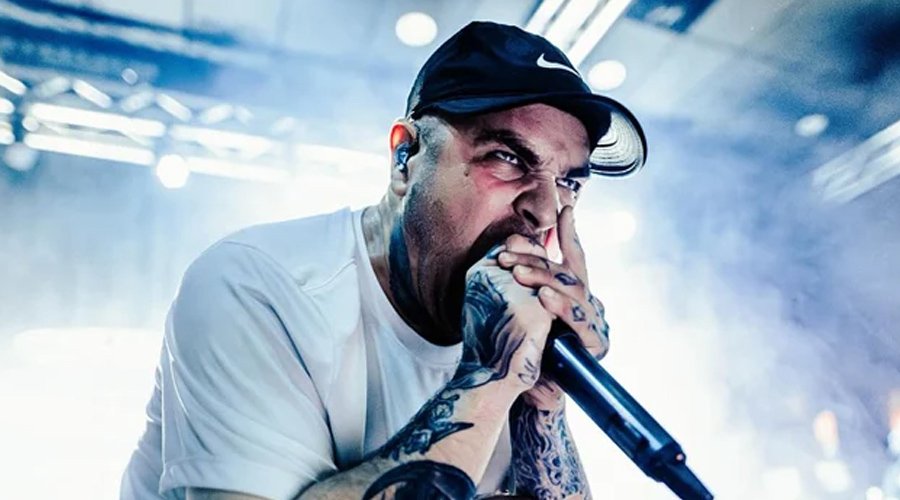

Emmure frontman Frankie Palmeri has weighed in on the ongoing debate over politics in music, arguing that many listeners only support artists expressing political views when those views align with their own beliefs.
The discussion gained momentum following recent onstage remarks from Metallica vocalist and guitarist James Hetfield, who addressed the band’s approach to political messaging during the group’s October 10 performance at The Sphere in Las Vegas, Nevada.
While thanking fans for traveling to see the legendary thrash metal band, Hetfield made it clear that Metallica’s focus was on bringing people together through music rather than using the stage to push outside agendas.

“Metallica is not here, like some other ‘entertainers’, to influence you with their bullshit, OK? We are here — no bullshit — we’re here to forget about all the outside shit, OK? Metallica’s agenda is love, energy and heavy music, baby!”
Hetfield’s comments sparked considerable discussion across social media, with some fans supporting the band’s desire to provide an escape from political divisions while others criticized the sentiment, arguing that musicians should speak out about issues affecting the world around them. Others took issue with what they viewed as an implied dismissal of artists who choose to incorporate political messaging into their work.
Now, Palmeri has added his perspective to the conversation. In a post shared on October 13, the Emmure vocalist criticized what he sees as hypocrisy among people who argue that music should be political while rejecting messages that challenge their own perspectives.
“The ‘music is always political’ discourse is funny. Everyone parroting this wants political music ONLY if it aligns with THEIR brand of politics and world view. Otherwise they seethe and become blood thirsty mutants who literally want people to die for disagreeing with them.”
Palmeri continued discussing the subject with users on X, including one commenter who referenced bands such as Fox Lake and Silent Planet as examples of artists incorporating philosophical and political themes into their music without necessarily changing the listener’s personal beliefs.
The commenter also brought up Emmure’s controversial 2014 track “Bring A Gun To School,” noting that listening to provocative lyrics does not automatically mean a listener endorses their subject matter.
Palmeri responded with a sweat emoji before clarifying his position, emphasizing that his criticism was not directed at musicians who choose to express themselves through their art.
“For sure.
I am definitely not saying bands shouldn’t say what they want in their music.
Just calling out the selective outrage and hypocrisy these people are droning on about.
If words inspire people, great. It’s just so obvious they only want to hear one type of message.”
When another user asked whether that selectiveness was necessarily a bad thing, Palmeri pushed back, arguing that it undermines the broader argument that music is inherently political or should serve as a platform for political expression.
“Yeah. It is bad. How are you missing the point here? It’s weak and makes the entire argument that music is inherently or should be political moot, when in fact they are not open to music that expresses or even alludes to countering their world view. Cowardice and hypocrisy.”
In another exchange, a commenter suggested that political disagreements increasingly lead to an all-or-nothing mentality, in which people view those who disagree with them as enemies.
Palmeri acknowledged the appeal of that kind of group mentality while warning about its potential consequences.
“I understand the seduction of it all. The safety, the group think, a chance to lash out violently with your comrades. Dangerous stuff.”
The discussion also touched on whether listeners from different political backgrounds are equally willing to engage with music that challenges their beliefs. One commenter argued that conservatives may tolerate music that contradicts their views up to a certain point, while claiming the same is not true in reverse.
Palmeri responded by pointing out that he had not identified a particular political group in his original post.
“You know what’s funny? I didn’t even specify what political spectrum people are trying to establish as imperative to the art. Everyone just instinctively knows who I’m talking about. It’s crazy!”
Palmeri’s comments add another perspective to the debate sparked by Hetfield’s remarks, raising questions about artistic freedom, audience expectations and whether listeners truly welcome political expression in music when it challenges their own worldview.
For Palmeri, the issue is not whether bands should address politics in their music, but whether audiences are willing to extend that freedom to artists whose messages they disagree with.
If you’re rocking with The Mosh Network, hit the link and add us as a Preferred Source on Google. That’s the easiest way to keep our latest metal, hardcore, and alternative news, tours, and releases showing up directly in your feed.