
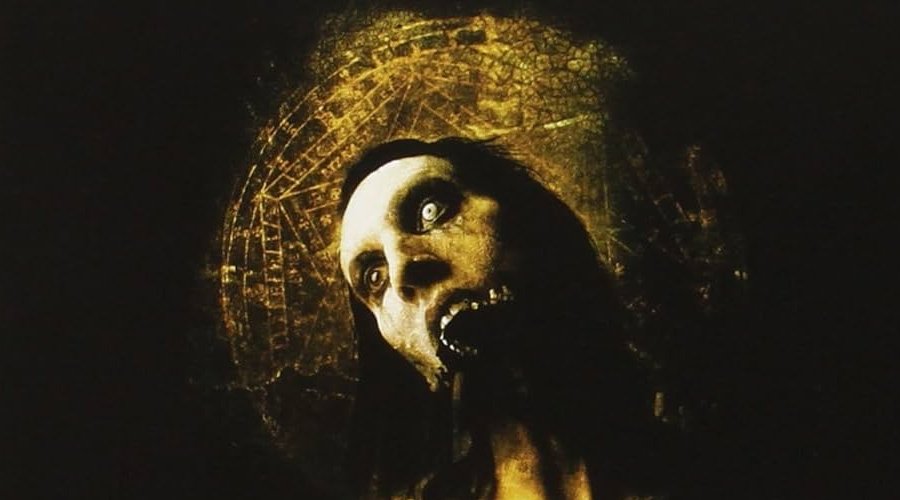

Released at a volatile time in American culture, Holy Wood (In the Shadow of the Valley of Death) saw Marilyn Manson directly confront the controversy that nearly derailed his career. Decades later, the record stands as one of his most misunderstood — and most vital — artistic statements.
In the aftermath of the Columbine High School tragedy in 1999, Manson became a lightning rod for blame. Despite no credible connection to the shooters, he was vilified by mainstream media, politicians, and conservative pundits who painted him as a symbol of moral decay. When Holy Wood dropped on November 14, 2000, it arrived not just as a new album — but as a pointed counterattack.
“To me, Columbine was the most tragic event in American history that had nothing to do with me,” Manson would later reflect. “This album had to confront that head-on.”
A Cultural Response Masquerading as a Rock Album
Written as the first installment in a loose conceptual trilogy — followed by Mechanical Animals and Antichrist Superstar — Holy Wood was a scathing dissection of America’s obsession with religion, violence, fame, and martyrdom. It captured a snapshot of a post-Columbine, pre-9/11 nation teetering on cultural implosion.
Lead singles like “The Fight Song,” “Disposable Teens,” and “The Nobodies” struck with venomous intent, pairing industrial riffs with caustic lyrics. On “The Nobodies,” Manson delivered one of the album’s most gut-punching lines:
“Some children died the other day / We fed machines and then we prayed.”
It wasn’t subtle — and that was the point.

Shock Rock on Trial
The backlash against Marilyn Manson in 1999 was swift and far-reaching. Shows were canceled, media outlets blacklisted him, and politicians seized the moment to turn public outrage into cultural condemnation. Holy Wood was Manson’s opportunity to reclaim the narrative — and he did so unapologetically.
“People say I glorify violence,” Manson stated at the time. “But America glorifies violence — in its religion, in its films, in its wars.”
Rather than retreat, he leaned into the storm — presenting himself not just as a scapegoat, but as a mirror to the society that created him. The album funneled his rage into something sharper, more political, and more layered than anything in his previous discography.
A Legacy That Still Echoes
Though Holy Wood didn’t top the charts — it debuted at No. 13 on the Billboard 200 — it has since earned a reputation as one of Manson’s most ambitious and respected works. Over time, its influence has only grown, especially among listeners too young to recall the hysteria surrounding its release.
The album’s themes — media manipulation, censorship, gun violence, the public’s thirst for easy villains — remain uncomfortably relevant. Holy Wood wasn’t just a cultural snapshot; it was a warning siren.
“It’s not our job to create a safe world,” Manson famously said. “It’s our job to reflect the one we live in.”
Decades later, that sentiment still hits hard.
Re-Evaluating Holy Wood
In retrospect, Holy Wood marked a turning point — not just for Marilyn Manson, but for the shock rock genre as a whole. It proved that beneath the controversy was an artist capable of making urgent, provocative music with lasting substance.
For those discovering it now, Holy Wood feels like a time bomb that’s still ticking — loud, unflinching, and far ahead of its time.
Do you love independent bands, or are you in one? The Mosh Network is not just a rock/metal news website, but it doubles as an independent band directory, designed so that visitors can browse independent bands by not just subgenre, but location as well. It’s perfect to keep your finger on the pulse of your area’s hottest and newest bands or if you’re in a band, it’s a great way to find bands to network with! Click the banner below and start discovering bands all over the world, now!
5 Comments
More:
https://springgreen-caribou-353428.hostingersite.com/marilyn-manson-holy-wood-retrospective/
Still a great album
My favorite album of his
Michael Campos I like most of their music but this album made me a fan
It was definitely a nice departure from Mechanical Animals. Holywood was very underrated album indeed.